01
No Hot Water
Possible causes include an interrupted energy supply, failed heating components, or control issues.

From cold showers and strange noises to leaks and inconsistent temperatures, learn what warning signs mean and how to approach water heater repairs safely.
A water heater problem may involve plumbing, electricity, gas, controls, or the tank itself. Symptoms help you describe the problem but do not establish a diagnosis.
Possible causes include an interrupted energy supply, failed heating components, or control issues.
Hot water runs out quickly, takes too long to recover, or cannot keep up with household demand.
Moisture may originate from supply connections, valves, fittings, or the water heater tank.
Popping, rumbling, or banging can be associated with sediment or other operating issues.
Water becomes unexpectedly cold or too hot, or temperature varies during use.
Rust-colored water or an unusual odor may require checking the heater and plumbing system.
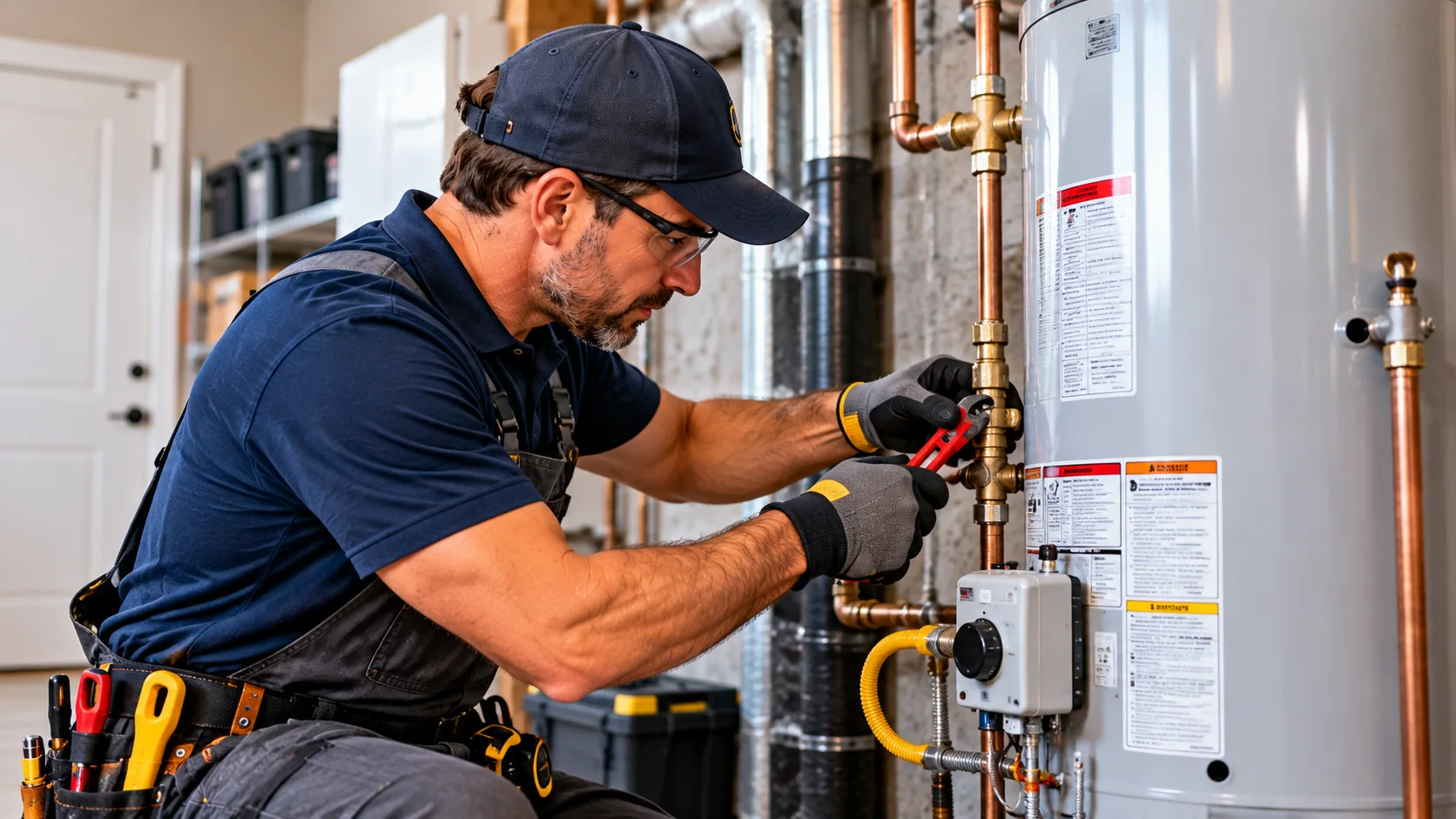
The right choice depends on the heater type, age, condition, repair cost, and whether the tank or other major components have failed.
A professional may recommend repair when the issue is isolated and the heater remains otherwise serviceable.
Replacement may be appropriate for a leaking tank, recurring failures, or when repair costs are disproportionate to the remaining service life.
When replacing, compare capacity, energy source, efficiency, installation requirements, and conventional tank versus tankless options.
Equipment lifespan and suitability vary; an on-site assessment is needed for a property-specific recommendation.
Ask which components were evaluated and what evidence supports the diagnosis.
Request an explanation of repair cost, expected reliability, and replacement alternatives.
Clarify equipment, labor, removal, code-related upgrades, permits, and possible extra charges.
Discuss household demand, fuel type, recovery needs, and available installation space.
Verify relevant credentials and local requirements for plumbing, gas, or electrical work.
Understand equipment and labor coverage, exclusions, and maintenance recommendations.
The cause can vary by heater type and may involve power, fuel supply, controls, or heating components. Avoid opening equipment or attempting electrical or gas repairs; arrange qualified service.
It can be. Moisture may come from a fitting, valve, condensation, or a leaking tank. Keep away from electrical hazards and hot water, and have the source assessed promptly.
Not necessarily. Noise can have several causes, including sediment buildup. A professional can assess whether maintenance, repair, or replacement makes sense.
Consider installation cost, household hot-water demand, energy source, maintenance, and available space. Neither type is automatically best for every home.
Installation may involve pressurized water, electrical wiring, gas piping, combustion venting, and permits. Requirements vary by location; qualified professional installation is generally the safer approach.
Excessively hot water presents a scalding risk and can indicate a control or temperature problem. Avoid using the affected hot water and have the heater checked.
HomeRepairSOS offers general homeowner information about water heater problems and repair decisions. For diagnosis, repair, or replacement, contact a qualified local plumbing or water heater professional.